Wednesday, November 30, 2011

Poser, art models and design

Poser is a program for rendering ... doesn't tell you much, does it.

Poser was originally conceptualized as a computer version of those little wooden men used for models in doing art (so that you can pose the little figure and keep all the proportions and perspectives properly focused, without needing a live model).  Somewhere in the process it gained the ability to render 3D models, animation and approximate real art rather well.  Much to my surprise it is up to version 9.  Runs about $99.00 on Amazon, which is pretty impressive for powerful graphics software.

Poser 9 by Smith Micro Software Inc. (Software - Sep 20, 2011) - Mac OS X 10.5 Leopard, Mac OS X 10.6 Snow Leopard, Windows 7 / Vista
Buy new: $199.99 $99.99 // or from non-Amazon, 27 new from $79.93. 

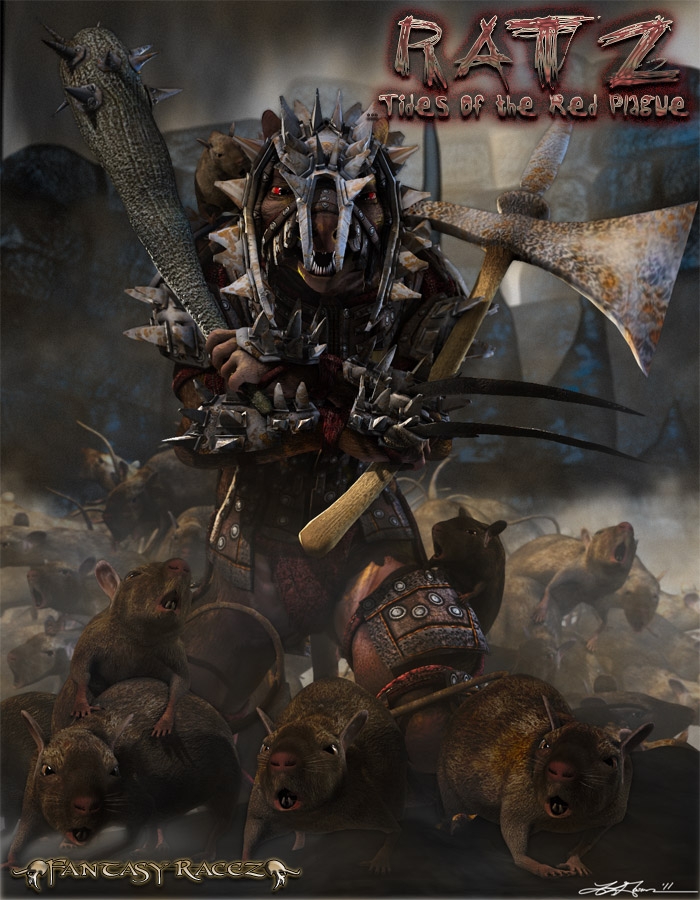
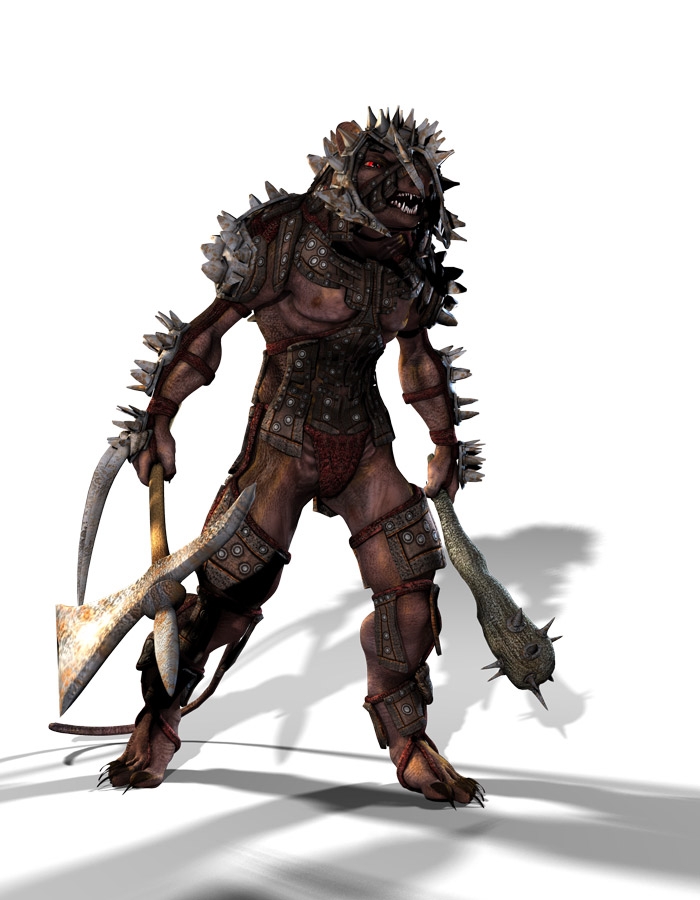
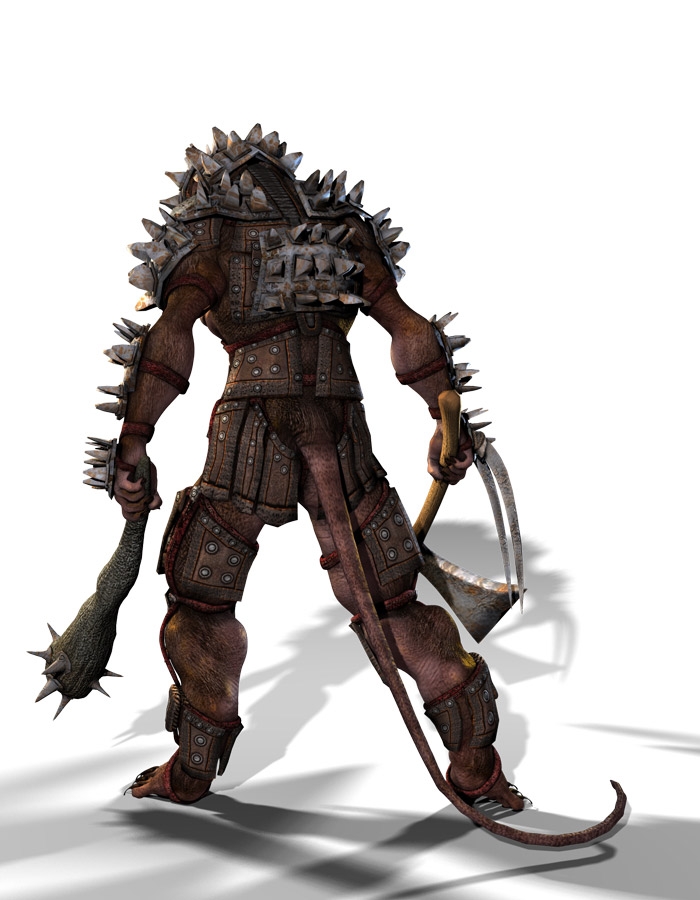
The models, or software packages you import into the software (so you don't have to write it all yourself) are very powerful.  For example, from Sixus1 (a studio I like, run by people I've liked well in the past):

Ratz - Male
Ratz - Male Ratz - Male Ratz - Male
Product Code: Poser 6 & up
Reward Points: 0
Availability: In Stock
Price: $19.98 $8.98
Qty:  Add to Cart
   - OR -   
Package Includes:
Ratz figure w/ morphs, textures &
9 Poses for Ratz and props
Conforming Armor/Harness (Harness, Plates, Spikes and Leather)
3 Weapons Props - Club, Axe and Hand Blades
Advanced Material settings for Poser 7.2 & up
DS3 default MAT poses


Everything you see in the advertisement the software will do for you, allowing you to create all of those images in those poses, and many others, with a number of 3D and 2D backgrounds.

There are literally thousands of models and props available for purchase or for free.


Draelunen
$13.98 $8.49
Warrior Lich
$13.98 $8.98
Ratz - Male
$19.98 $8.98

Anyway, this is an explanation of what Poser is, so that when you hear about it it will make sense to you.

The illustrations at http://adrr.com/story/ are all pretty much done with Poser.  If I were a real artist, they would look much, much better.  But until you have an art budget (which you should get if you are intending to sell things), when you are in the proof of concept state, or just for friends, Poser is well worth understanding.

Sunday, November 6, 2011

Podcasts and such on writing // Mistworld

Writing is very useful for game and game design and especially scenario design.
One difference is that with a scenario you can sometimes get away with more exposition.

You would think a world where the souls of the damned sink into the ground to mingle with undead and demons in a radioactive hell wherever light does not reach would not have the description "pastoral" -- but you would have missed just how far the light reaches.

Not how I plan to introduce Mistworld if I do a D&D reboot, (introduction and link to the proof of concept pdf here:  http://www.adrr.com/story/mist001.htm)  -- given that I've actually got D&D adaptations that have been done of parts of it, I've been giving that some thought -- but it is the sort of thing that is possible.

Many areas of Mistworld have this for a pattern:

  1. steadings -- one to four families.
  2. holdts -- overgrown steading with servants and attendant families.
  3. vills/shrines --  a place at the center of several steadings or holdts with a shrine and an attendant of some sort.  No one else lives permanently at a vill, if it is just a shrine, no permanent attendant is there either.
  4. villages -- a shrine with people living there
  5. towns -- has tradesmen, two or more shrines, more people, may be walled, may have a patron.
  6. cities -- has a permanent market and temples.
I've been thinking of doing something on the lines of the Regular Folks campaign to go with the reboot.

The characters would start as 0 level characters living at steadings.  A message would come from the shrine with a quest of sorts, an assignment, to hunt for verdigris foxes.  There probably aren't any, but they are a harbinger. d3+2 hit points, do d3-1/+1 when they bite (the physical damage is d3-1 so from 0-2, +1 magical damage from decay).  unarmored, +1 from size and high dexterity.  Their moral breaks easily.

Turns out that there are some (2d2 worth).  The report that there really are some is not good news, it means that the beneath is drawing closer in this location

The characters are sent to the nearest town to take the news, and seek back-up, after they are sent to warn those in the steadings.

While they are at the town, refugees arrive, with news of a disaster.  At this point they can choose to be initiated and begin to adventure.
  • The seven deadly sins: Pride; Envy; Gluttony; Lust; Anger; Greed; Sloth.  Each has a species of undead tied to it.
  • One can gain access to matrix magic by being initiated to one of the pathways of the seven saints.  In return, the initiate has a duty, a compulsion, to travel and strive against evil for a season.  Many people choose this "easy" path to magical enlightenment, wear the colored magical shirt of their patron saint, and travel for somewhere between eighteen months and two years. 
  • The seven virtues (one to each of the seven hero saints that go with the seven moons): Chastity (purity); Moderation (self-restraint); Generosity (vigilance); Zeal (enthusiasm); Meekness (composure); Charity; Humility (humbleness).  
I had roughed this out, with a number of encounters, creatures, etc., before, but I lost my copy of the rough, which was done for BRP.  I'm now thinking of redoing it for OD&D/D&D.  I'm just not sure it is worth the effort.

But it did give me a different introduction to the setting.

Thursday, November 3, 2011

Story fragment ... tangled

It is dark, cold and I'm alone
tangled, I can't think
They've taken my medication, I can't remember who I am or how old I am
tangled, like knotted yarn
The blue monkeys are making me knit and it keeps sucking my mind away


A story about a place where knitting is magical, and not necessarily in a good way.


Thursday, October 27, 2011

Game Theory Links

These are old, I expect some link rot  (and yes, I'd like suggestions, updates and improvements).


On-Line Course Materials: Game Theory Links:

History of Game Theory
Al Roth
Combinational Game Theory
David Levine's Theory Page

International Journal of Game Theory
Encyclopedia of Philosophy Game Theory
Chronology of Game Theory
Game Theory Society

Center for Game Theory in Economics
Game Theory and Politics

University of Wyoming -- victim of link rot

They all date from the old days, when I did a sub-web site for the Academy of Management. 

Also (note that the format and such of this import is a mess) ... 


ADR RESOURCES
Recommends books about...
Game Theory
Whether you negotiate, faciliate or mediate, it sometimes helps to have a deeper knowledge about the theory that explains what is really going on.  Game theory sometimes helps, sometimes confuses, but is an important area of scholarship and learning.  The following books are designed to help you understand game theory and how to apply it.

.
Thinking Strategically
Thinking Strategically, The Competitive Edge in Business, Politics and Everyday Life.
This is a best selling book in Japan, required reading at many business schools and a solid introduction to the applied theory of games in real life. Scores of case studies. 393 page paperback.


.
Game Theory A Non-Technical Introduction

Game Theory -- A Nontechical Introduction, by Morton D. Davis
This is an inexpensive paperback that provides an easy introduction to the topic of game theory. 252 pages. Order this book. For a book that is similar, with a social sciences cant, Games and Decisions by R. Duncan Luce and Howard Raiffa is a 484 page introductory text "unencumbered" by mathematical details.


.
Game Theory for Applied Economists

Game Theory For Applied Economists, by Robert Gibbons
This is a serious review of the economics and theory for people who have found other books too abstract.  Available used or new. 


.
A Course in Game Theory

A Course in Game Theory, by Martin J. Osborne and Arial Rubenstien
This book is extremely popular and is written for graduate students and advanced undergraduates.  It includes precise definitions and full proofs and over a hundred exercises. 


.
Game Theory

Game Theory
by Drew Fundenberg and Jean Tirole.
Clear, practical introduction for the beginner  and an excellent text for a first or second course on Game Theory at the graduate level. Covers all the basics and the evolving special topics. Broad and Deep. 

 
.
Game Theory an Analysis of Conflict

Game Theory
An Analysis of Conflict
by Roger B. Myerson
568 pages, in paperback, the classic Harvard Textbook. Order this book.  Also consider The Strategy of Conflict by Thomas C. Shelling, 309 pages from Harvard.
Order this book. 


Search:
Keywords:
In Association with Amazon.com
.

.
Equity

Equity
In Theory and Practice
by H. Peyton Young
246 pages, from Princeton, this book applies game theory to what we mean when we decide that something is fair.  An analysis of public policy concerns, including the allocation of scarce resources, how and why social ills are distributed, with many, many practical examples and discussions.  While not perfect, it analyzes every major theory of social justice and how they fail to address what really happens.  Graduate level and above. Order this book.

.
Co-opetition
Co-opetition
by Adam Bradenburger and Barry J. Nalebuff
This is a major book on strategic alliances with competitors.  Narrow, but interesting use of game theory and the current cutting edge in applied game theory (verses academic analysis). Order this book.


I am pleased to be able to recommend some very good books.
Search:
Keywords:
In Association with Amazon.com
. Yes, I'd like feedback and improvement.  This is all old now.

Monday, October 24, 2011

The three characters in every story ...

This is the recipe, not "formula" as in write to a map.  It is useful for scenario design as well.  The podcast is at:


http://www.writingexcuses.com/2011/10/02/writing-excuses-6-18-hollywood-formula/ 

Transcript is at:  http://wetranscripts.livejournal.com/49969.html 

Every story should answer these questions:

-who is the protagonist?
-what is their goal?
-who is the antagonist?
-what are they doing to stop the protagonist?
-who is the relationship character?
-what is the theme they are conveying?
-when do they come full circle with said theme?

As one commentator said "4 years of Film school ..." and this podcast taught him things he really needed to know.

While they explain this in the context of:


Casablanca

The podcast goes far beyond that.

Very useful.